Qualify, line up on the grid and race five rival teams over three laps, while managing tyres, weather and a battery boost.
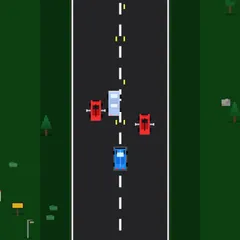
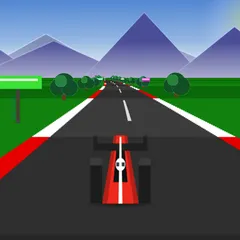
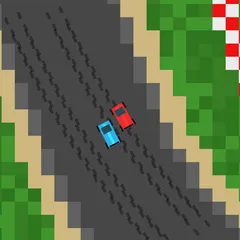
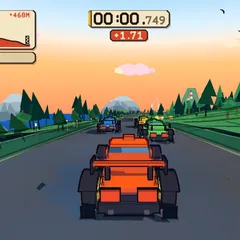
Seen from above, Mini Grand Prix is an open-wheel racing game that takes you through an entire race weekend. You pick a track on a spinning globe, sign with one of six made-up teams, set a qualifying lap, then start a three-lap race from the grid slot that lap earned you.
The driving is only half of it. Tyres wear out, rain can arrive mid-race, your battery boost has to be timed, and you must pit at least once. Each of those is a small call that can win or lose positions.
The race weekend
From the home screen, choose one of 24 venues from the season list or spin the globe and click it there. Then hit Grand Prix Weekend. On the setup screen you choose your team, the AI level, the weather and the tyre you start on.
Qualifying puts you on an empty track for a single timed lap. The race grid is then sorted by those times. Watch the five red lights and wait for them to go dark before you press W, or a five-second jump-start penalty lands on your time. A tower on the right side tracks every car and the gap between them. The winner takes 25 points, then 18, 15, 12, 10 and 8 down to sixth place.
Driving and pit stops
Steer with the arrow keys, accelerate with W and brake with D. The car holds its speed when you lift off the gas, so braking points matter. X reverses. S is an emergency brake, usable only inside the pit lane.
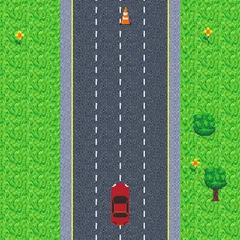
Leaving the track slows you down. On kerbs your top speed drops to 90 percent, on runoff to 80 percent and on gravel to 70 percent. Repeated trips off the road earn penalties too.
When it is time to stop, tap P, then steer along the line marked PIT IN. The lane has a speed limit. Pull up at your box, then choose a tyre with keys 1 to 5: Soft, Medium, Hard, Intermediate or Wet tyres. Bolting on new tyres of the compound you already had still counts.
Strategy notes
- Watch the forecast banner. A warning like “Rain in about 47s” lets you prepare a change to wet-weather rubber.
- Brake firmly but not wildly. Medium braking refills the most battery, while locking up or driving in the rain refills less.
- Space spends the whole battery in one go. With a full battery you get five seconds of added power, so save it for a long straight.
- Softs are fast but fade the quickest. Hards hold up longer at a lower peak, and every set loses a little top speed per lap.
Good to know
The Garage lets you swap between four car types, from a slippery low-drag setup to a high-grip, high-downforce build that corners and brakes harder. You also get a budget of performance points to spread over five areas: top speed, acceleration, steering, braking and energy recovery. Menus can be shown in English or Chinese.
Controls
| Action | Keyboard | Mouse |
|---|---|---|
| Steer | Left and right arrows | — |
| Accelerate | W | — |
| Brake | D | — |
| Emergency brake (pit lane only) | S | — |
| Reverse | X | — |
| Fire the battery boost | Space | — |
| Request a pit stop, then pick tyres at the box | P, then 1 to 5 | — |
| Pause or go back to the menu | Escape | — |
| Restart after a session | R | — |
| Pick a circuit, team and settings | — | Click the menus, or drag the globe |
Mini Grand Prix FAQ
Can I play Mini Grand Prix on a phone or Chromebook?
Not on a phone. You steer with a real keyboard, and there are no touch controls on screen. A Chromebook, laptop or desktop with a keyboard works fine, and you use the mouse or touchpad for the menus and the globe.
Does it save my progress?
Yes. Your points, season standings, unlocked color schemes and best laps are kept in your browser. Clearing your browser data or moving to another computer resets that career.
Is it single player?
Yes. You drive one car against computer-controlled rivals from the other five teams, and you can set how tough they are. There is also a Time Trial mode where you lap alone for as many laps as you choose.
What should I do if I keep getting penalties?
Most penalties come from three things. Don't touch W until the start lights are out, avoid causing contact, and stay on the track rather than cutting across kerbs and gravel. Passing under a yellow flag also costs time, and skipping the required pit stop adds twenty seconds.